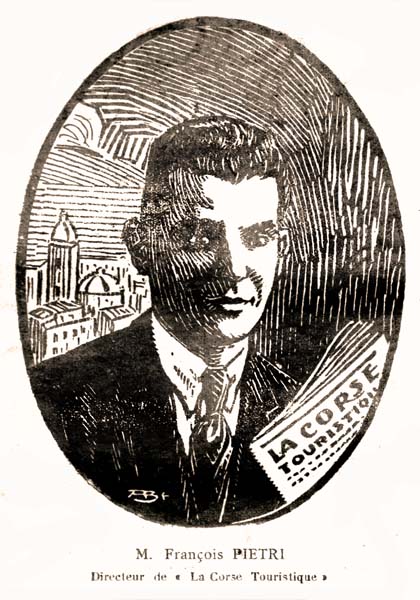
In memoria
To our grandfather and great-grandfather
François Pietri
Founder and editor of La Corse touristique (1924 – 1934)
18851941
Paccionitoli, Zonza · Alta Rocca
Born in 1885 in Paccionitoli, a hamlet of Zonza in the heart of the Alta Rocca, he founded La Corse touristique in Ajaccio in December 1924, a 'monthly organ of island interests: economic, historical and literary'. For ten years he wrote its editorials.
A life
In the back room of an Ajaccio shop, Eugène Bonnafoux, a bookbinder and François Pietri’s brother-in-law, gathers the issues of La Corse touristique. Sets are prepared for the founder’s children. In these bound volumes they can find, year by year, the villages, voices and debates of the island where their father grew up. To understand what he left them, we can begin on the paths that linked Paccionitoli to the plain of Lecci.
From Paccionitoli to Lecci
François Pietri was born in 1885 in Paccionitoli, a hamlet of Zonza in the Alta Rocca. The only child of Jacques Alphonse Pietri and Désoline Marchi-Nicoli, who came from Lecci, he grew up between the mountains and the plain. Herds, cultivated fields and journeys dictated by the seasons were part of his childhood. In this pastoral Corsica, families had ties and livelihoods both inland and near the coast.
His parents sent him to board at the Petit Séminaire in Ajaccio. The family account remembers the habits of study and the religious devotion that marked those years. There he met Joseph Cucchi, who introduced him to his sister Adeline Cucchi. She spent some time with relatives in Philadelphia. After she returned, François and Adeline married in Ajaccio on 17 September 1910.
Leaving and returning
After military service in Bastia, François worked as an accountant in Paris. In the early years of their marriage the couple returned to Corsica and ran a shop in Bonifacio. In 1913 he joined the Banque Commerciale du Maroc, in the early years of the French protectorate. His route shows the opportunities open to a young Corsican of his day, from making a living on the island to seeking work on the mainland and in territories under French rule.
The war interrupted his working life in trade and accountancy. Called up, he served in Morocco and on the French front, where he was seriously wounded in 1918. His military citations and Croix de guerre record his conduct at the front. The family manuscript also describes a man returning to civilian life in 1919 with lasting injuries to his health. He settled again in Corsica with Adeline and their children.
Making a living in Ajaccio
In 1920 François opened a shop on Cours Grandval. To finance it, he sold some of the family property, notably in Paccionitoli. The manuscript records what was dispersed: livestock, farm equipment and plots whose names map the places that mattered to one family. The inventories give a sense of what it meant to move from living off the land and herds to making a living that depended on rents, credit and customers paying their bills.
Moving to town changed how he earned his living. A few years later the review gave him another way to stay connected to the country of his childhood. It gave him room to discuss inland villages and the questions that would shape their future, while reaching readers who lived elsewhere or were discovering the island.
A review to make Corsica better known
The first issue of La Corse touristique appeared in Ajaccio in December 1924. François Pietri wrote the editorials and brought together writers, scholars and artists. Alongside landscapes and travel accounts, the review published historical studies, poems and articles on the island’s economy. An article on the future of air travel could be found alongside a study of the convent of Tallano. Photographs and drawings showed the places the authors wrote about.
For Pietri, tourism raised practical questions. How could visitors be welcomed, travel around the island and be encouraged to get to know its people? What part should the interior play in developing tourism? These concerns make the review a record of the ambitions and difficulties of interwar Corsica. Its pages show how Corsicans of that generation saw their island and tried to shape its future.
An illustrated review was expensive to print. The family account mentions the cost of photographs and colour reproductions as well as the cut in the departmental grant in 1934. Subscriptions and advertising struggled to cover the costs as François’s shop ran into difficulties of its own. The collection listed by the Bibliothèque nationale de France covers 1924 to 1934.
Passed from hand to hand
François Pietri died in 1941. The volumes bound by Eugène Bonnafoux stayed in the family. Thanks to that legacy, his grandson Jean-Luc Pietri discovered the review in the 1970s. In 1990 another of his grandsons, François Ollandini, collected the editorials in a book. From 2007 Jean-Luc began putting a selection of texts and illustrations online.
Through these efforts, the volumes prepared for the children became a record that other readers could explore. In them we can find the places François Pietri knew, the concerns of the people who lived there and their plans for the island. His attachment to Corsica reaches us through the pages he wrote and those he opened to other voices.
Conclusion
“François PIETRI had known the Corsica of his ancestors, travelled the world and lived through war. With La Corse Touristique, he wanted to give his island something that would outlive him: pages to make it known, images to make it loved, and a memory so it would not be forgotten.”
- 1885
Born
Born in Paccionitoli, a hamlet of Zonza in the Alta Rocca.
- 1924
The review
December: first issue of La Corse touristique, printed in Ajaccio.
- 1924 – 1934
The editorials
A monthly review of some 90 issues, each opening with his editorial.
- 1934
Final issue
The review ends in the autumn, after ten years in print.
- 1941
Death
François Pietri dies.
- 1990 · 2007
Remembrance
Two of his grandsons help preserve the memory of the review, each in his own way.
- In 1990, François Ollandini collects his editorials in a book published by La Marge.
- From 2007, Jean-Luc Pietri publishes a selection of issues online, with transcribed texts and digitised illustrations. © www.la-corse-touristique.corsica
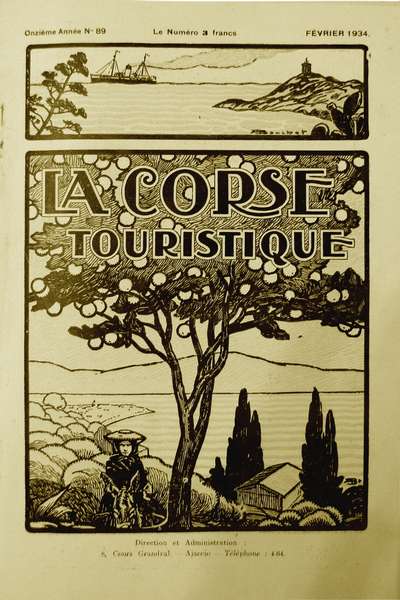
The review · 1924 – 1934
La Corse touristique
Printed in Ajaccio from December 1924 to autumn 1934, François Pietri's monthly review set out to make Corsica known: its landscapes, its history, its legends, and its needs too.
Economists, historians and writers published alongside its editor. The issues are held today by the Bibliothèque nationale de France and digitised on Gallica.
His editorials were collected by François Ollandini: La Corse touristique, les éditoriaux de François Pietri (1924-1934), La Marge, Ajaccio, 1990.
18 of his editorials can be read on this site, alongside the review's narratives, sonnets and illustrations.
“Anyone curious about humanity, who is not content to travel through it with a guidebook and a Kodak, can only love us more as they come to know us better.”
— La Corse touristique, n° 1, décembre 1924 · Translated from the French
His editorials
- décembre 1924« Premier numéro de la Corse Touristique »
- janvier 1925« Notre souci doit être de satisfaire la clientèle par une simplicité honnête »
- février 1925« Il y a tellement de choses à faire… »
- mars 1925« Il fallait conserver justement aux auberges de ce pays ce caractère patriarcal, cette simplicité aimable de jadis »
- avril 1925« Exploiter la Corse au nom des Corses, parfait. Exploiter les Corses au nom de la Corse, voilà ce qu'il ne faudrait point faire »
- mai 1925« La Corse est à la mode »
- octobre 1925« Il y a une "mentalité" du tourisme »
- avril 1926« Aucune distraction nouvelle n'a été offerte au touriste… »
- novembre 1926« Nos visiteurs se plaignent notamment… »
- septembre 1928« Il faut à la Corse une politique des routes »
- mars 1929« Croire au développement du tourisme en Corse »
- mai 1929« Cette terrible maladie qui s'appelle "l'électorite" »
- août 1929« Après les bateaux et les routes, il y a les hôtels »
- juillet 1930« Dégagé de toute préoccupation électorale… »
- octobre 1930« La création d'une commission spéciale, dite "du tourisme" »
- novembre – décembre 1931« Le marasme qui sévit dans le monde des affaires a resserré les cordons de toutes les bourses »
- mars – avril 1932« Nos élus ne semblent pas attacher à cette question du tourisme l'importance qu'elle comporte… »
- mars – avril 1934« A la question touristique ... il n'est jamais trop tard pour bien faire »
Family album
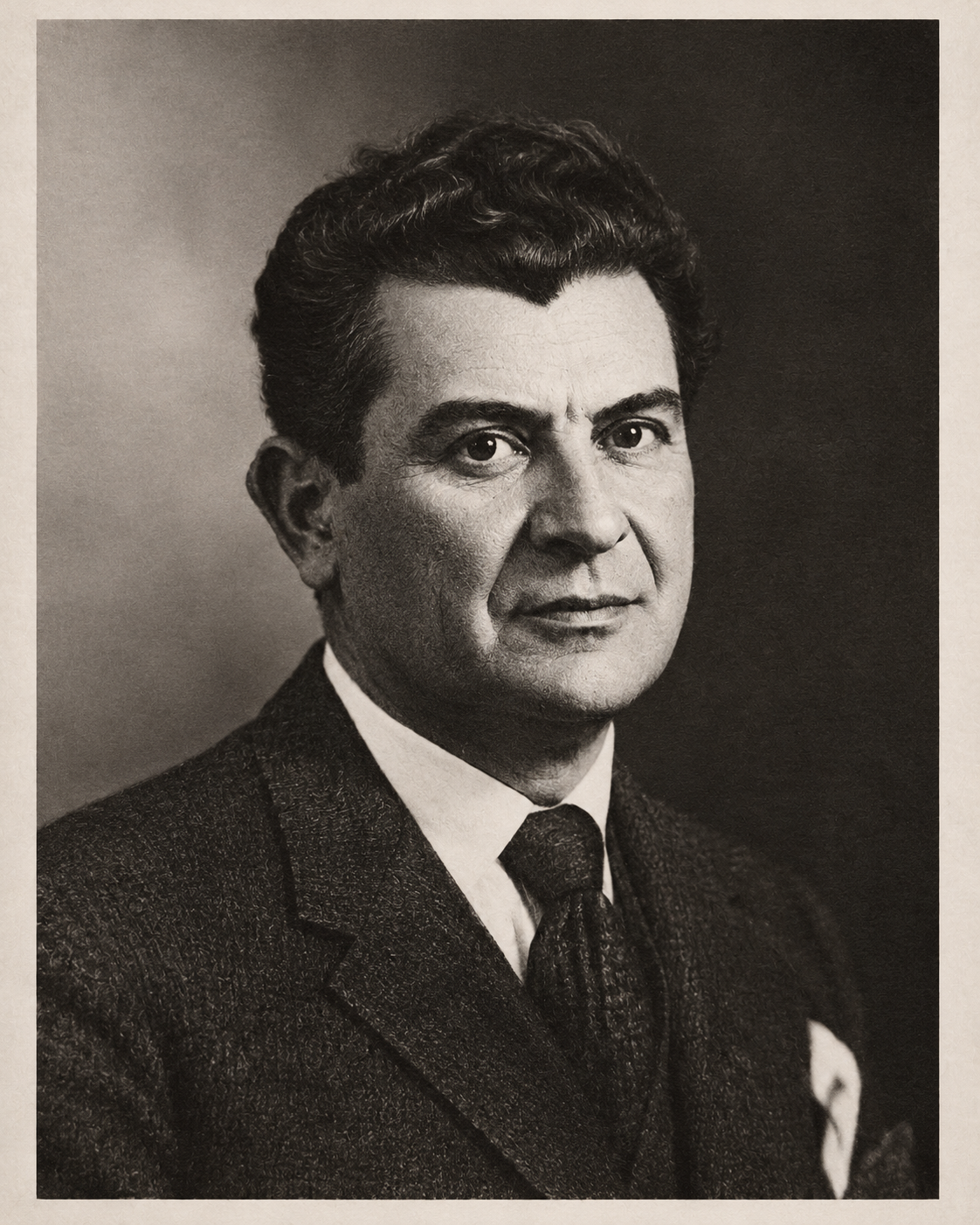
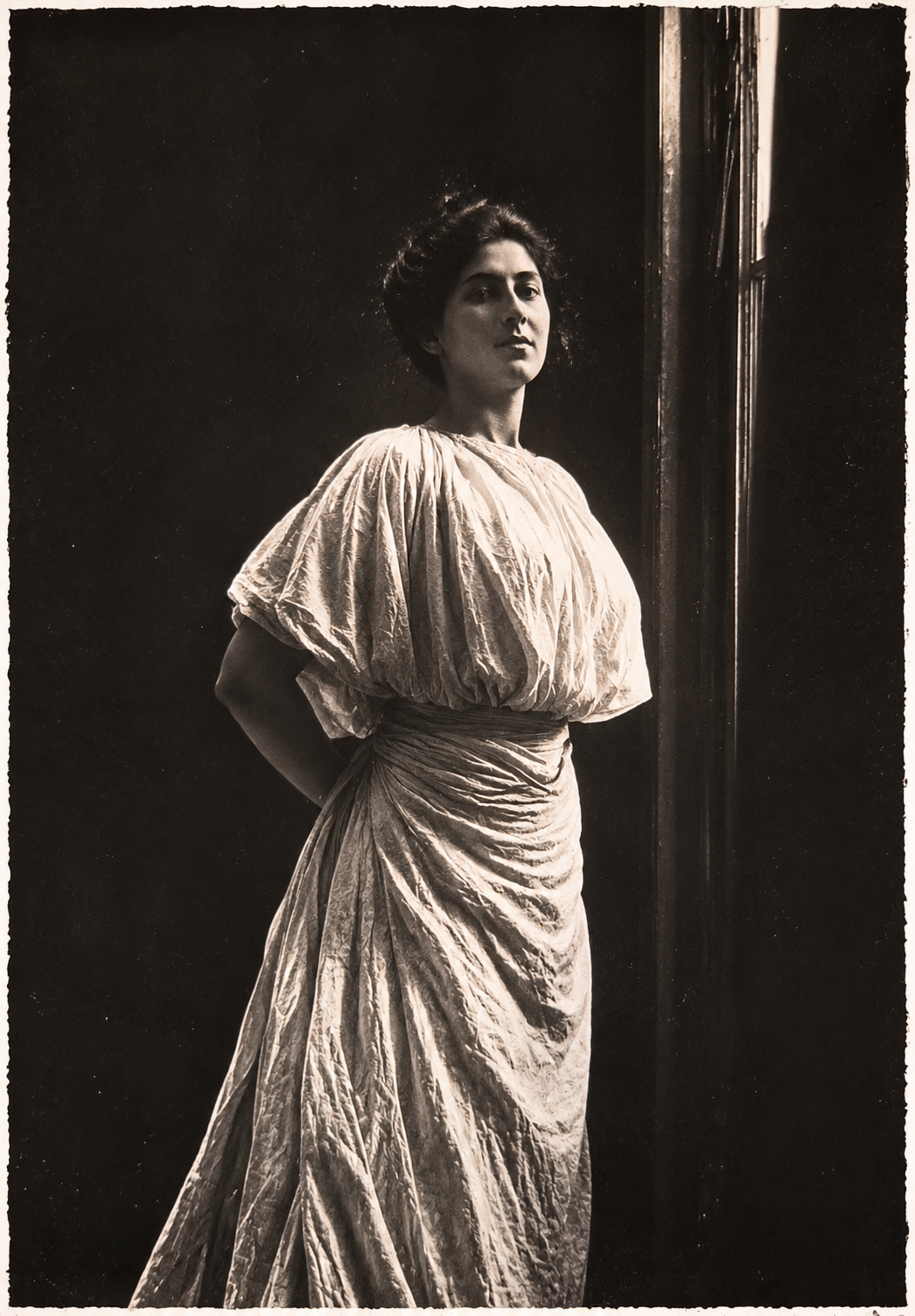
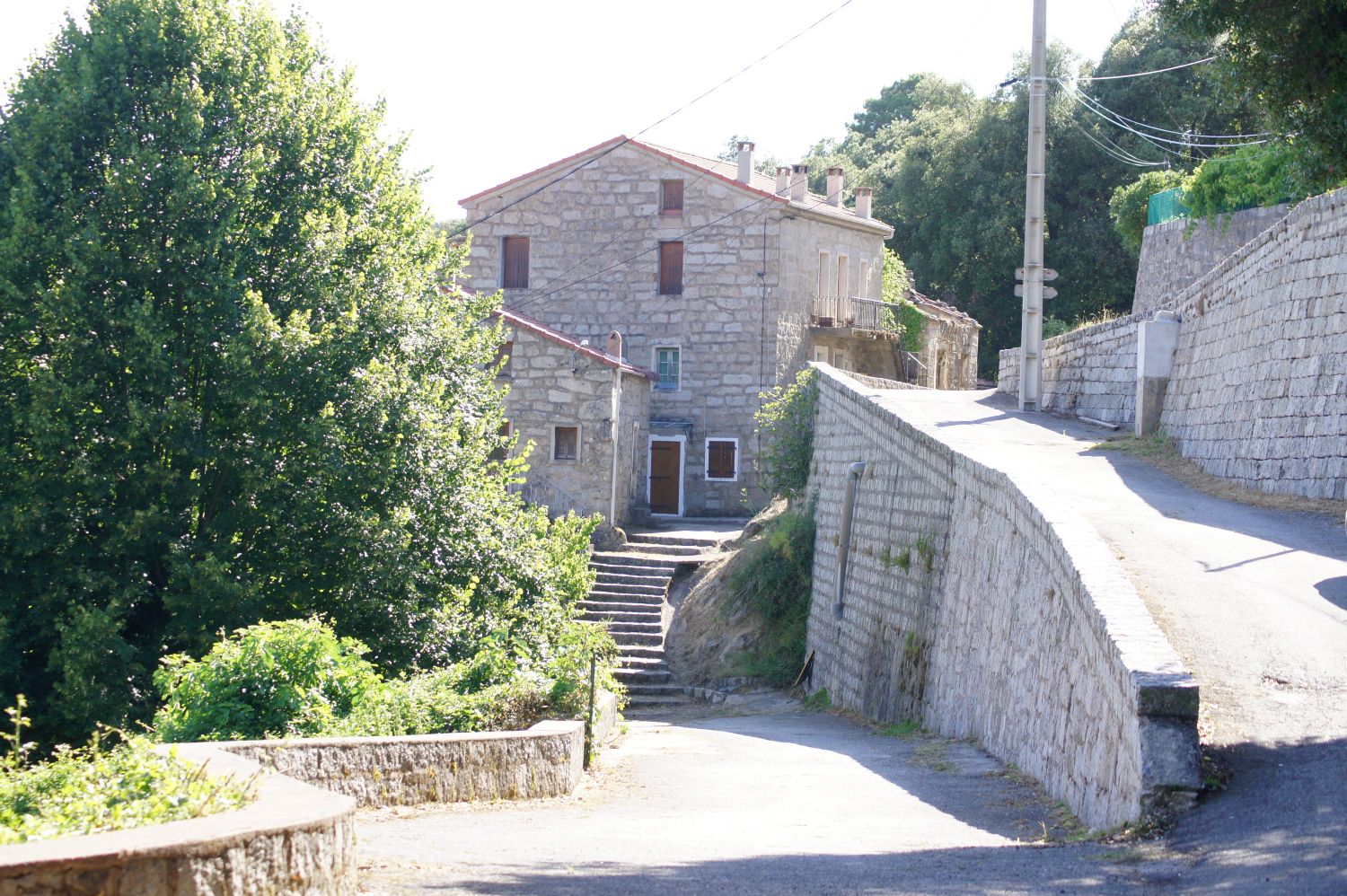
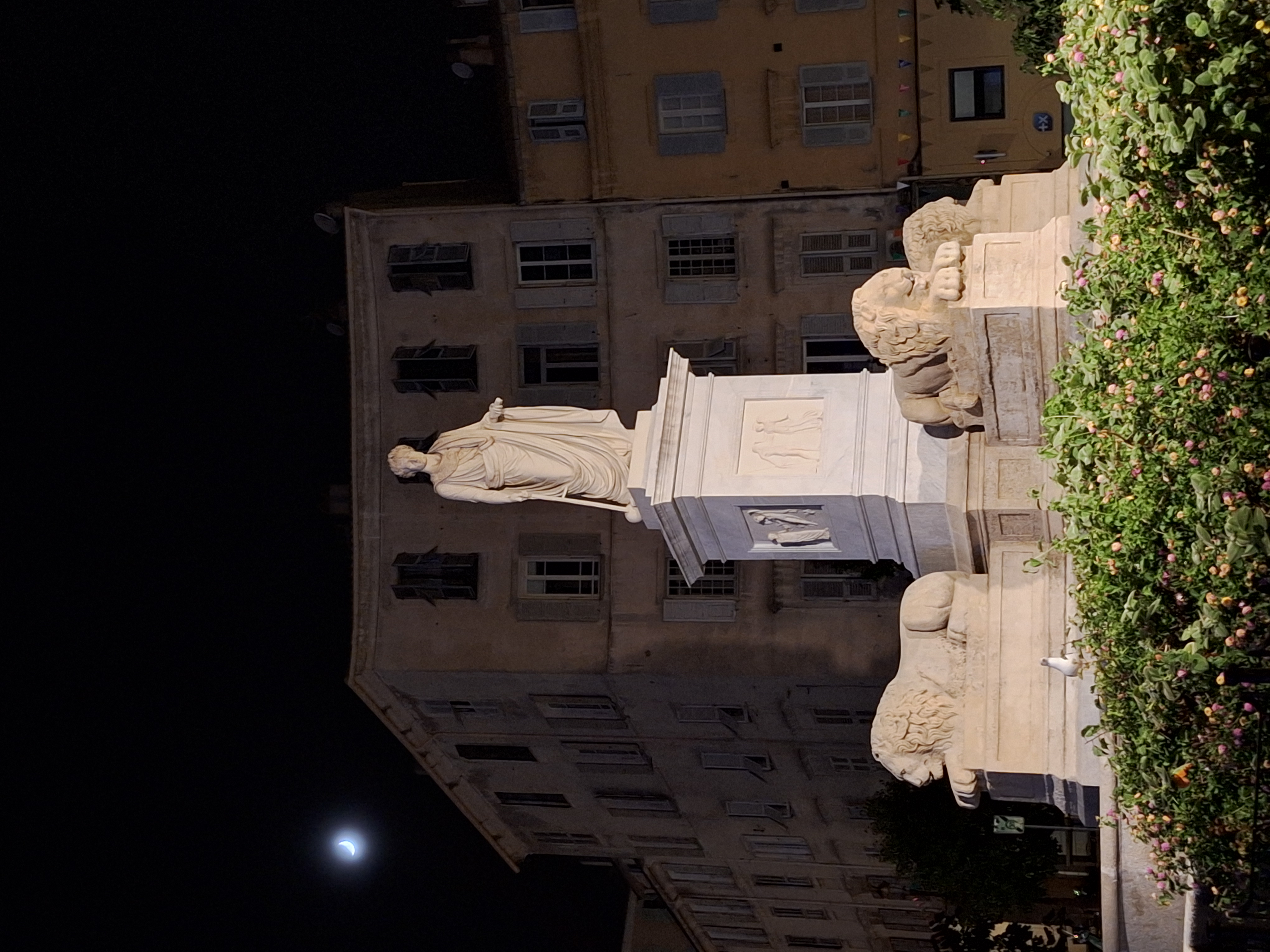
His generation
Born at the end of the 19th century, Corsicans of his generation knew full villages and mule tracks, then the Great War that emptied the valleys, then exile to the mainland and the colonies. Those who stayed, and those who came back, kept the language and the land. This site is for them too.